
“Amazing sheets of lightning and whirlwinds, and fiery dragons were seen flying in the sky…. on the sixth day before the ides of January, the woeful inroads of heathen men destroyed God’s church in Lindisfarne island by fierce robbery and slaughter”
Lindisfarne is an island in the far north of Northumberland, 15 miles south of the English/Scottish border. The island is only accessible via a causeway that twice a day is swallowed by the North Sea cutting the island off from the mainland. It is known as the cradle of christianity as it was from here in 634 AD that the Irish monk St Aidan at the request of King Oswald began to spread the word of christianity building a priory which became central to this movement. It was this settlement that was then attacked by the “great heathen” army made famous in shows such as Vikings, it was this act of heathen violence which was immortalized in the Lindisfarne Gospels from which the excerpt above is taken.
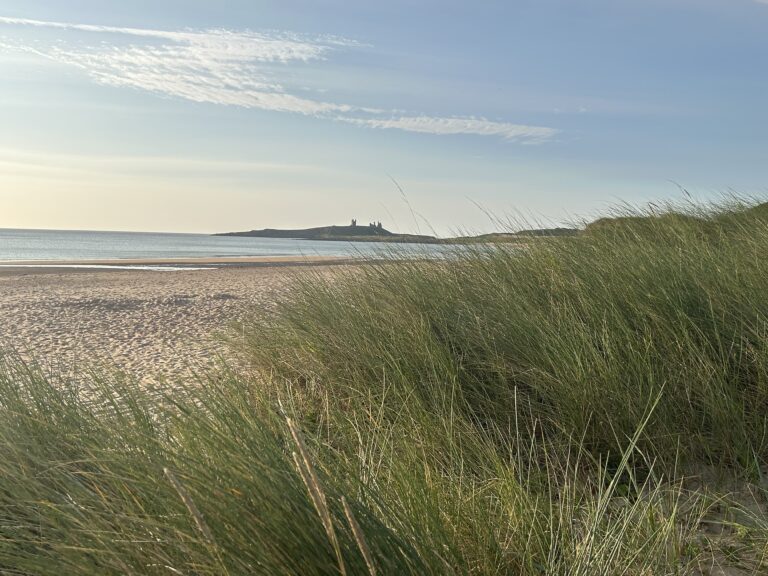
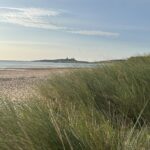
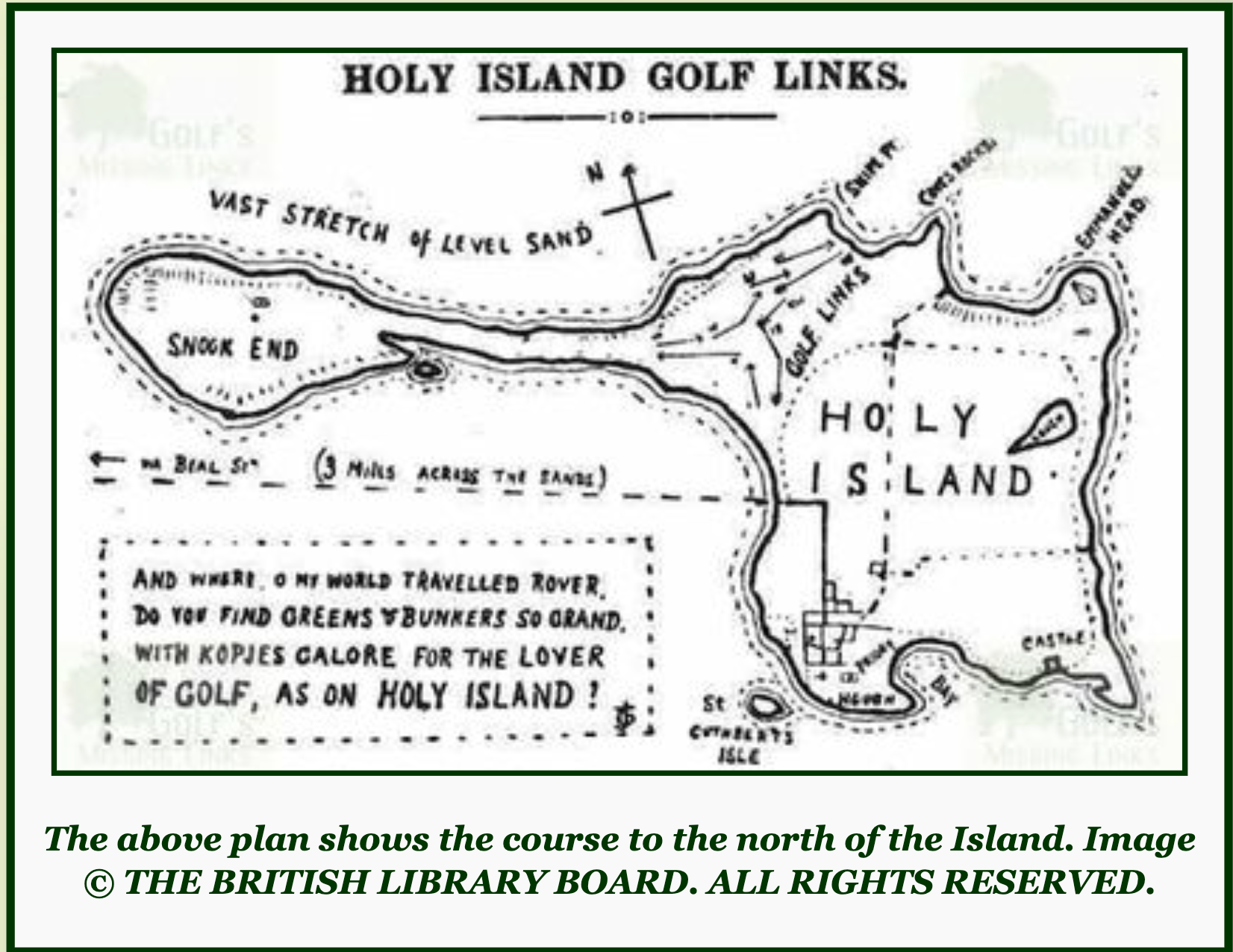
The Island’s geography can be split into 2 parts, as you join the island on the causeway road you are flanked by great dunes formed over time by nature, then as you continue towards the settlement on the island, where the ruins of the once great priory stand, the land becomes more hospitable and flattens. On a patch of land beginning in the gentle flatlands of the island and then meandering between the dunes is where James Braid laid out his 9 hole creation.
Taking in the geography of the island along with its proximity to some of Braid’s other work it’s easy to see why golf found its way to the island, some writings of the time even exclaimed that the land had been waiting for the royal and ancient game to find its way there since the times of St Aiden. In 1906 Mr Braid was commissioned to lay out the links and in one extract from a report in the Berwickshire new and general advertiser in the same year he speaks after the completion of his work stating “that the new course, one of the wildest and most natural to be found anywhere, will furnish fine golf that will gladden the hearts of the players of the heroic school. On Holy Island the making of bunkers is a business of the utmost simplicity. You just remove the top turf and the wind does the rest, scooping out the sand and shaping the bunkers in the proper way, proving once again how golf, of all games, is most akin to simple nature”.
The following year in 1907 the club was inaugurated and the game continued to be played on the island until the war years. During this time the club was requisitioned by the R.A.F and from what little writing there is available about the course it seems this may have been the start of its decline as afterwards in the late 1940’s separate petitions were made for improvements to be made both to the course and clubhouse both of which appear to have been rejected with the club finally falling to the annals of time in the 1960’s.
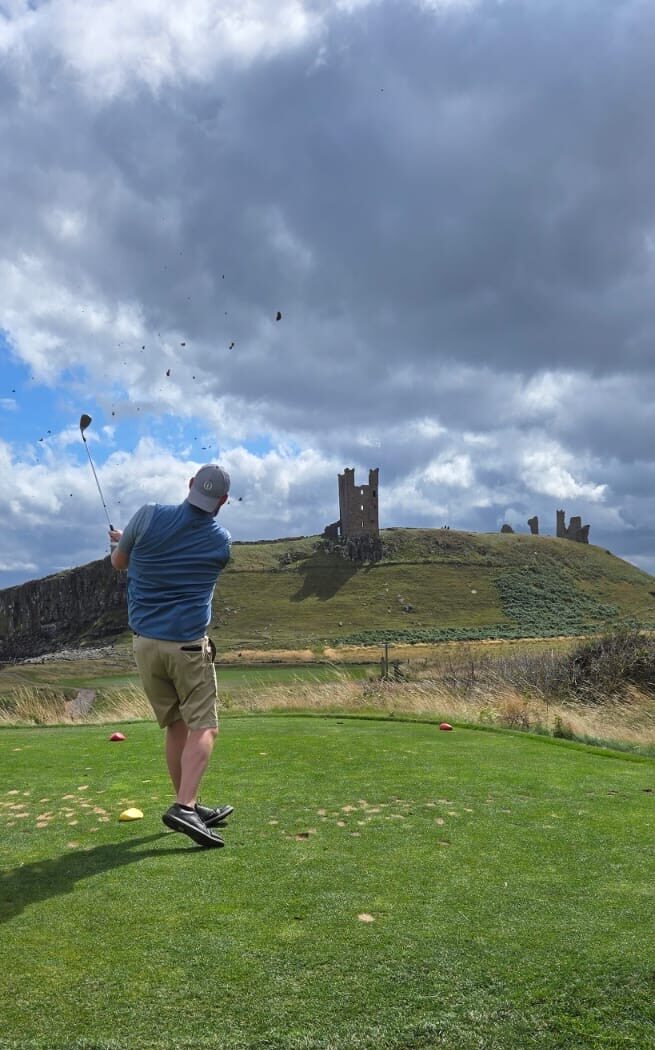
As a frequent visitor to the island with my family I am captivated at the thought that golf was once played upon it. Seeing the success that other courses in the area have found along with the boom in tourism, I guess it leaves me with a sense of what could have been for this course. I know that the likelihood of a return is impossible and maybe islanders would not want the additional traffic this would create, but from a golfers perspective i dont think one could picture a more natural setting for the game, golf’s own island where players could literally, not just metaphorically, be cut off from the world and given how fast paced the modern world we live in is how special could that have been and the boom that this could of had for the Islands economy. Given how close the island’s remaining fishing industry came to destruction, if the Defra legislation to completely ban fishing in the waters surrounding it, could the return of the course provide that future security for those fortunate few who call this area their home?